
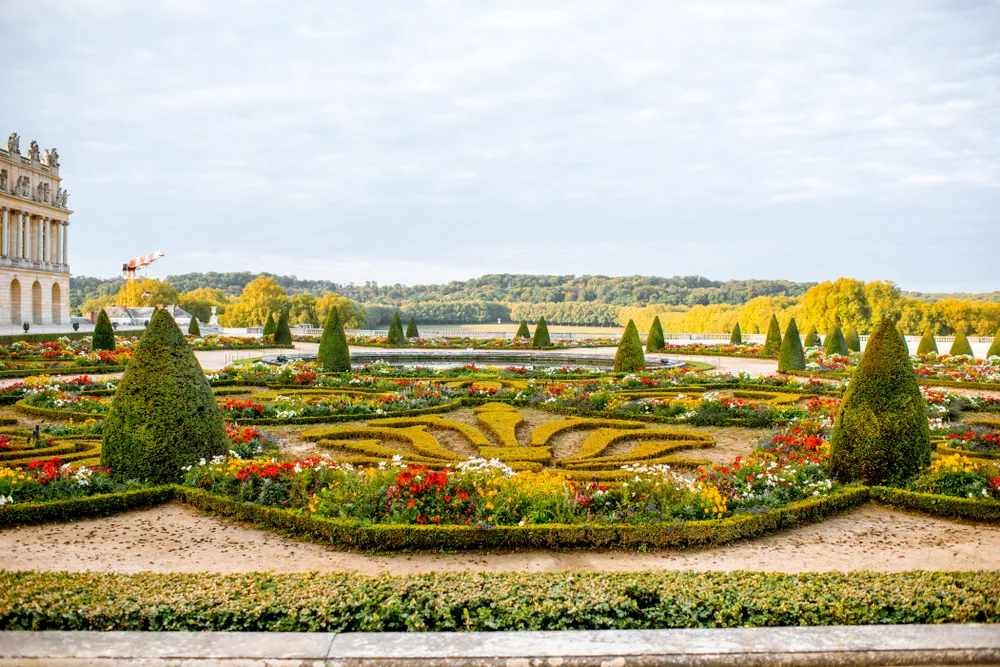
There’s a version of the Versailles Gardens visit that most people have — a warm afternoon, a crowd-heavy path down from the palace terrace, a glimpse of a fountain, a few photos, and then back inside. It’s fine. It ticks the box. But it barely scratches the surface of what André Le Nôtre actually built here.
The Gardens of Versailles cover approximately 800 hectares. They contain 50 fountains, 620 water jets, 200,000 trees, and a Grand Canal that stretches nearly a kilometre and a half from the palace. They were designed as an extension of Louis XIV’s political theatre — a living argument that even nature itself submitted to French royal authority. And they change, meaningfully and dramatically, with every season.
What you experience in July is a completely different place from what you find in October, or February, or April. The mistake most visitors make is treating the gardens as a backdrop to the palace visit rather than a destination in their own right. This guide fixes that. Season by season, fountain show by fountain show, route by route — here is everything you need to plan a Versailles Gardens visit that actually does the place justice.
Understanding the Versailles Gardens Before You Visit
Before diving into what each season offers, it helps to understand the basic geography of what you’re working with — because the Gardens of Versailles are not a single space. They’re a collection of distinct zones, each with its own character, crowd levels, and points of interest.
The Layout — What’s Where and How Far Apart
Standing on the palace terrace and looking out over the gardens, the view is deceptively simple: a central axis, a long canal, symmetrical geometry stretching to the horizon. In reality, the estate divides into several distinct areas that require deliberate navigation to explore properly.
The Parterre directly below the palace terrace is formal, geometric, and the most photographed section of the gardens. Beyond it, the Allée Royale — or Tapis Vert, the Green Carpet — runs straight to the Grand Canal. To either side of this central axis, the Bosquets: twelve woodland groves, each one a self-contained outdoor room with its own fountain, sculpture programme, and atmosphere. These are where the real discoveries happen, and where most first-time visitors never go.
The Grand Canal itself is a cross-shaped waterway nearly 5.5 kilometres long in total. In Louis XIV’s time, it housed a small fleet of Venetian gondolas and miniature warships. Today you can hire rowing boats from the Canal embarkation point — one of the most quietly enjoyable things you can do at Versailles that almost nobody talks about.
Further into the estate sit the Trianon palaces and Marie Antoinette’s Estate — technically separate ticketed attractions but geographically within the gardens. The Petit Trianon and the Hameau de la Reine, Marie Antoinette’s private retreat village, are a twenty-minute walk from the main palace along well-marked paths.
Garden Tickets — What’s Free, What Costs Extra, and When
This is where many visitors get caught out. The basic rules as of 2026 are straightforward once you know them, but confusing if you don’t check in advance.
On days without Musical Fountain Shows or Musical Gardens events — typically Tuesday, Wednesday, and some weekday dates outside peak season — entry to the main gardens is free of charge. The palace ticket does not automatically include garden access on event days. On Musical Fountain Show days, a separate garden ticket is required on top of palace entry.
The Trianon palaces and Marie Antoinette’s Estate require a separate ticket regardless of day or season. A full-access Versailles ticket covering the palace, gardens on event days, and the Trianon domain is available and represents the best value option for visitors who want to see everything in a single day.
Always check the official Versailles ticketing calendar before your visit. Event days shift seasonally, and the pricing structure changes between the low and high season dates.
Getting Around the Gardens — Walking, Golf Carts, and the Little Train
The gardens are large enough that walking the full circuit — palace to Grand Canal and back, with the Bosquets — comfortably takes four to five hours at a relaxed pace. For visitors who want to cover more ground with less walking, two alternatives exist on site.
Electric golf carts are available for hire near the palace terrace and allow self-guided exploration of the main garden paths and Canal at your own pace. The Petit Train — a land train — runs a fixed circuit between the palace, the Grand Canal, and the Trianon area, with hop-on, hop-off stops. Both options cost extra but are genuinely useful for families with young children, visitors with mobility considerations, or anyone working with limited time.
Spring at Versailles Gardens — April and May
Spring is, by most measures, the best time to visit the Versailles Gardens. The crowds haven’t reached their summer peak, the temperatures are comfortable for extended walking, and the gardens are in the process of waking up in a way that feels genuinely theatrical.
What the Gardens Look Like in Spring
April and May bring the kind of colour that the summer months, paradoxically, don’t always deliver. The formal parterres are replanted for the season with flowering arrangements that follow the same geometric precision as Le Nôtre’s original designs. Blossom appears across the tree-lined allées. The Bosquets, which can feel slightly bare in the depths of winter, fill in quickly as the canopy returns.
The light in April and May is also different from summer — softer, lower in the sky for longer, and far more flattering for photography. The palace façade reflected in the Bassin de Neptune in late afternoon April light is one of those images that appears on no tourist poster but stays with you longer than any of the ones that do.
The Musical Fountain Shows — When They Start and What to Expect
The Musical Fountain Shows — Les Grandes Eaux Musicales — return in spring, typically from late March or early April, and run through to late October. This is the signature event of the Versailles Gardens calendar, and if your visit falls on a show day, it transforms the gardens entirely.
The shows run on Saturdays, Sundays, and public holidays from April through October, with additional Tuesday dates added during peak season. During a Musical Fountain Show, all 50 fountains across the gardens operate simultaneously, choreographed to a programme of Baroque music — the same composers performed at Versailles during Louis XIV’s reign. The effect of walking through the Bosquets with the fountains in full flow and music drifting across the groves is something that’s genuinely difficult to describe adequately.
The show runs throughout the day, not as a single timed event. Different fountain zones activate on a rolling schedule, which means the best approach is to move through the gardens slowly, arriving at each major fountain basin as the schedule suggests.
Spring Visiting Tips — Crowds, Booking, and Timing
Spring is increasingly popular, and April and May weekends fill up quickly. Book Versailles tickets online well in advance for weekend visits — two weeks minimum from late April onward, more for the May bank holiday weekends which are among the busiest of the entire year.
Weekday spring visits are significantly quieter and represent the sweet spot of the entire year: reasonable temperatures, operational fountains on select days, and crowd levels that allow you to actually stand at a fountain basin and absorb it rather than photograph it over someone else’s shoulder.
Summer at Versailles Gardens — June, July, and August
Summer is peak Versailles season in every sense. The highest visitor numbers, the longest opening hours, the full calendar of Musical Fountain Shows and evening events — and the most demanding conditions for an extended garden visit.
The Royal Night Spectacles — Versailles After Dark
The headline summer event at the Versailles Gardens is the Grandes Eaux Nocturnes — the Royal Night Spectacles. These evening events, typically running on select Saturday nights from late June through August, transform the gardens into something that bears almost no resemblance to the daytime experience.
The fountains operate after dark, illuminated by coloured lighting. The Grand Canal becomes the stage for a fireworks display launched from the water. The Bosquets are lit with theatrical installations that change each season. The palace itself is illuminated from the gardens, reversing the usual viewing angle entirely.
Tickets for the evening spectacles are separate from daytime entry and sell out weeks in advance during peak summer. If you’re visiting Versailles in July or August and the dates align, this is worth prioritising above almost everything else on the itinerary.
Managing the Summer Heat — Routes, Timing, and Shade
The Versailles Gardens offer very limited natural shade along the main central axis and the Grand Canal. In July and August, the open parterre sections and the Tapis Vert can reach uncomfortable temperatures by midday, and the pale gravel paths reflect heat upward in a way that catches many visitors off guard.
The practical solution is to use the Bosquets. These twelve woodland groves are enclosed by tall hedging and mature trees, and the temperature inside them drops noticeably compared to the open paths. A summer garden circuit that prioritises the Bosquets over the central axis — looping through the groves rather than walking straight down to the Canal and back — is both more comfortable and more interesting, since the Bosquets contain some of the most beautiful fountain sculptures on the estate.
Arrive early, stay until midday, take a long lunch break inside or at one of the Canal-side cafés, and return for the late afternoon when temperatures drop and the light improves. This pattern makes a summer garden visit genuinely enjoyable rather than an endurance exercise.
Summer Booking — How Far Ahead and What to Secure First
Summer Versailles tickets, particularly for weekend Musical Fountain Show days and evening spectacle dates, should be booked as early as possible. In July and August, popular date combinations — Saturday daytime entry plus evening spectacle, or a full-access Versailles ticket on a fountain show Sunday — can sell out two to three weeks in advance.
Versailles skip-the-line guided tours that include garden access and the Musical Fountain Show are worth considering in summer specifically. A guide who can navigate the Bosquet fountain schedule, identify the quieter routes, and build the day around the show timing removes significant logistical stress from what can otherwise be an overwhelming visit.
Autumn at Versailles Gardens — September and October
Autumn at Versailles is a genuinely underrated season. The summer crowds begin thinning from mid-September onward, but the Musical Fountain Shows continue through October, the temperatures are ideal for extended walking, and the gardens offer something that spring and summer simply cannot: colour.
The Autumn Colour — What to Expect and When It Peaks
The 200,000 trees of the Versailles estate include a significant proportion of deciduous species — chestnuts, limes, oaks — that turn in October in a way that transforms the character of the gardens entirely. The formal geometry of Le Nôtre’s design takes on a different quality when the tree-lined allées shift from deep green to gold and amber.
Peak autumn colour at Versailles typically falls in the second and third weeks of October, though this varies year to year with temperature and rainfall patterns. The Bosquets are particularly rewarding in autumn — the enclosed groves accumulate fallen leaves that aren’t immediately cleared, and the combination of the sculptural fountain basins, the late-season light through coloured canopy, and the relative quiet of a weekday October visit is one of the most beautiful things the gardens offer across the entire year.
The Final Fountain Shows of the Season
The Musical Fountain Shows run through to late October, and the final show weekends of the season are worth targeting deliberately. Crowd levels in October are significantly lower than July and August, but the fountain shows still operate at full capacity — meaning you get the same programme with a fraction of the summer visitor numbers.
The last show weekend of the season carries a particular atmosphere that regular Versailles visitors often describe as their favourite of the year. The gardens are quieter, the light is lower, and there’s a quality to watching the fountains operate against autumn foliage rather than summer green that makes the whole experience feel unexpectedly intimate.
Autumn Practical Tips — What Changes After the Season Ends
From November onward, the Musical Fountain Shows cease until the following spring. The gardens remain open and free to enter on most days, but the operational fountains are a significant part of what makes the gardens extraordinary — visiting outside show season means experiencing the basins as sculptural objects rather than living waterworks.
Some of the Bosquet groves close for winter maintenance on a rotating basis. The Trianon palaces and Marie Antoinette’s Estate have reduced opening hours from November through March. Check the seasonal schedule on the official Versailles site before planning a late autumn or winter visit to avoid arriving at closed sections.
What Most Garden Visitors Miss (But Shouldn’t)
The Versailles Gardens reward the visitors who look beyond the obvious route. Here are four things that most people walk straight past — each one worth seeking out deliberately:
- The Bosquet de la Colonnade is arguably the most beautiful of the twelve woodland groves and consistently among the least visited. A circular peristyle of 32 marble columns surrounding a central fountain basin, it was designed in 1686 and feels almost otherworldly when encountered in the relative quiet of a weekday morning. Most visitors following the main central axis never reach it.
- The Bassin de Neptune sits at the far northern end of the gardens, a significant walk from the palace terrace but worth every step. The largest fountain basin in the gardens, with 99 water jets that create a wall of water during shows, it’s almost always quieter than the central fountains — and the sculptural programme around its edge is extraordinary.
- Rowing on the Grand Canal is available for hire by the hour and is one of those experiences that changes the spatial relationship with the gardens entirely. From the water, with the palace visible at the end of the Canal a kilometre away, the scale of what Louis XIV built becomes physical in a way it doesn’t from the paths. It’s genuinely one of the best-value experiences on the estate.
- The Hameau de la Reine — Marie Antoinette’s private hamlet within the estate — is easy to miss if you don’t know to look for it. A collection of rustic thatched cottages built around an artificial lake, designed to look like a working Norman farm village, it’s a complete counterpoint to the formal grandeur of the main gardens and tells a specific story about life at Versailles that the palace rooms don’t quite reach.
Planning Your Full Versailles Gardens Visit — Practical Checklist
Getting the logistics right before you leave makes the difference between a comfortable day and a stressful one. Here’s everything to sort in advance:
Tickets — What to Book and How Far Ahead
Book Versailles tickets online before your visit, not on the day. For weekend visits from April through October, booking at least two weeks in advance is the minimum. For July and August weekends, four weeks is safer. For evening spectacle dates in summer, book the moment they go on sale — typically two to three months before the event date.
Decide before booking whether you want palace entry only, gardens access on a show day, the Trianon domain, or a full-access combination. The ticketing structure is logical once understood, but buying the wrong ticket and discovering the issue at the gate is a frustrating and avoidable problem.
Getting There — From Paris and Transport Options
The RER C from central Paris to Versailles Château Rive Gauche is the standard route — approximately 45 minutes from Paris Saint-Michel, running regularly throughout the day. The palace entrance is a short walk from the station, and the route is well-signed.
Guided tours by deluxe minibus from Paris are worth considering if you’re visiting in peak summer and want the logistics — transport, skip-the-line entry, and garden orientation — handled from the start. A knowledgeable guide on the journey out can cover the context that makes the garden visit significantly richer once you arrive.
For visitors staying in Versailles town itself, the palace and gardens are walkable from the central area, and the town has excellent accommodation options that allow an early arrival before the day-trip crowds arrive from Paris.
What to Bring for a Full Day in the Gardens
The Versailles Gardens are a genuinely physical visit. Plan for four to five hours on your feet if you want to cover the main areas properly. A few essentials that make a significant difference:
Comfortable walking shoes are non-negotiable. The main paths are well-maintained gravel, but the Bosquet interiors and some of the more remote garden areas involve uneven ground. Proper walking shoes or light hiking trainers are the right call in every season.
Water is essential from April through September. The on-site café points near the Canal and the Orangerie provide food and drink, but in peak summer the queues are long and the prices reflect the captive audience. Bring a refillable bottle and fill it before you leave Paris.
A compact sun protection kit — sunscreen, a foldable hat, and sunglasses — is necessary from March through October. The open sections of the gardens, particularly the main axis and the Canal, offer no shade whatsoever.
Download your Versailles ticket QR code offline before you leave. Mobile connectivity at the entrance gates during peak hours can be unreliable, and a timed entry ticket you can’t display on arrival creates unnecessary stress.
Conclusion
The Versailles Gardens are not a backdrop. They are not the thing you glance at before going back inside the palace. They are, in many ways, the main event — a 350-year-old masterpiece of landscape architecture that changes character with every season, rewards every hour of exploration you give it, and contains more to discover than most visitors realise exists.
Come in spring for the flowering parterres and the first fountain shows of the season. Come in summer for the evening spectacles and the full programme of Musical Fountain Shows. Come in autumn for the colour, the quiet, and the last shows of the year. Come in winter if you want the gardens entirely to yourself and don’t mind trading the fountains for the silence.
Book your Versailles tickets in advance, arrive early, wear shoes you can walk in for five hours, and follow the paths that lead away from the main axis. The Versailles Gardens will give back exactly as much as you put in — and for a place this size, this rich, and this old, that’s a very considerable return.